

Dataminr blog

Cyber Risk
The Doctrine Hasn’t Caught Up to the Math: Lessons from the 10th CISO 360 Global Congress

Cyber Risk
The Miasma Worm: A Three-Layer Model for Modern Cyber Defense
The moment Miasma’s source code dropped, the threat stopped being trackable. This is how a program built on real-time signal, environment fusion, and continuous control validation closes that gap — before the next version ships.
Public Sector
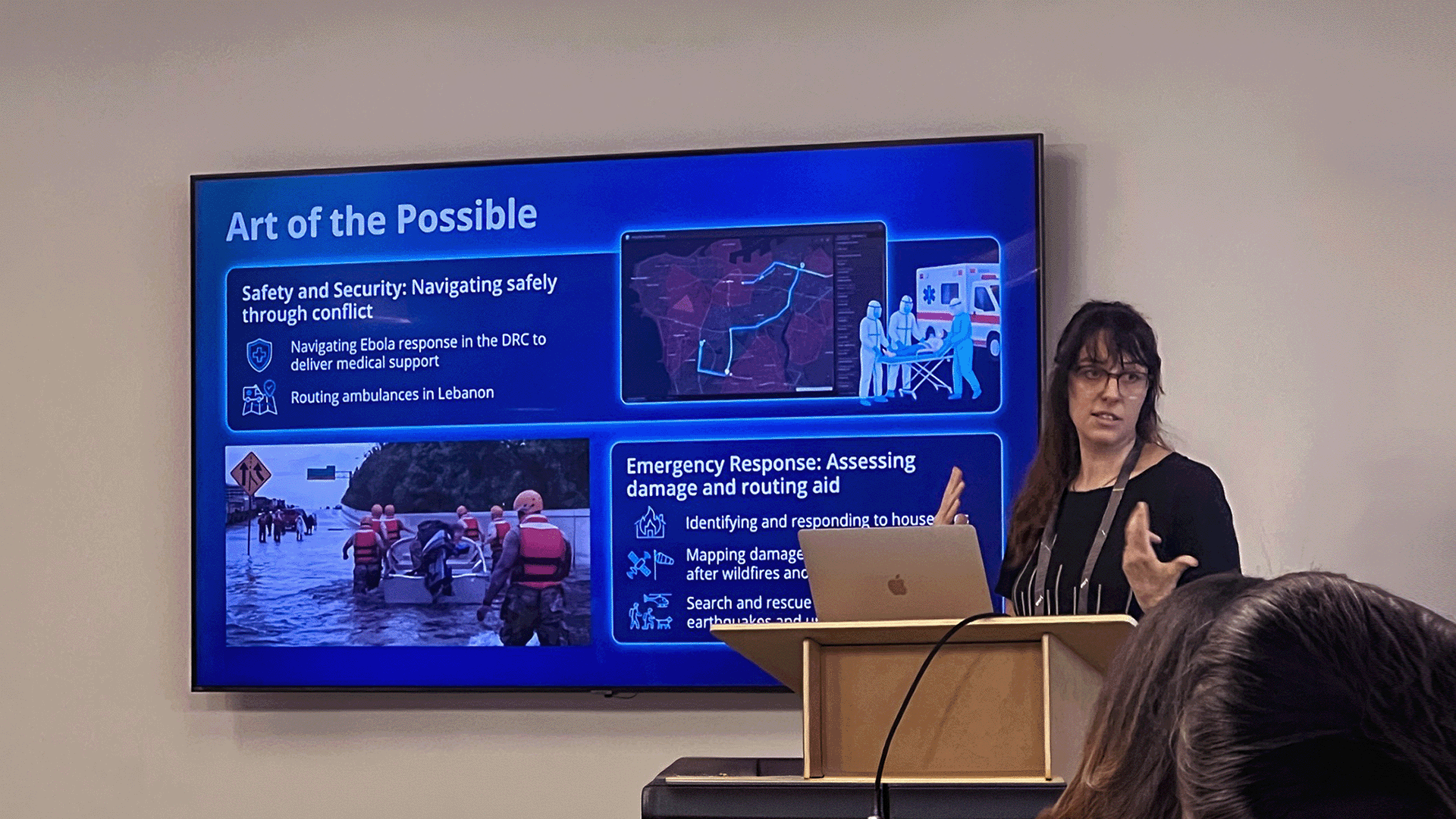
The Right Information in the Right Place: Insights from Esri’s Humans in Crisis Meetup
Key takeaways from Esri’s Humans in Crisis Meetup in Los Angeles, U.S., where GIS practitioners and humanitarian organizations explored how geospatial technology and real-time intelligence combine to drive faster, smarter disaster response.

Public Sector
Real-Time AI Intelligence Meets GIS: Dataminr’s Native Integration with ArcGIS Velocity



Public Sector
What 6 Cities in 30 Days Reveal About Infrastructure Risk in 2026

Public Sector
Predicting Themes for the Esri Safety & Security Summit and Why Real-Time AI will be on Center Stage
The threat environment facing state and local governments is evolving faster than legacy tools were built to handle. At the 2026 Esri Safety & Security Summit, Dataminr’s public sector team will focus on three themes driving the conversation: resilience, modernization, and real-time information. Here’s what those themes mean in practice — and how AI-powered intelligence is changing what’s possible inside the Esri ArcGIS environment.

Public Sector
America250: What It Takes to Secure the Nation’s Summer of Events
Securing the America250 event series requires complex coordination across public and private stakeholders. Dataminr’s AI-powered real-time intelligence provides a crucial, shared operational picture, enabling faster, synchronized responses and consistent security coverage without human fatigue.

Public Sector
Beyond BOD 26-04: The Vulnerability Management Gap No Directive Can Fix

Public Sector
The Perimeter Has Moved: Airports, Public Data, and the New Critical National Infrastructure Threat

Cyber Risk
NIS2 Reporting Obligations: How AI-Driven Threat Intelligence Closes the Gap
NIS2 has created mandatory timelines, board-level personal liability, and fines of up to €10 million for more than 160,000 entities across Europe — including governments. The problem isn’t the deadlines. It’s the detection architecture those deadlines assume.

Cyber Risk
From London, With Urgency: Dataminr at Infosecurity Europe 2026
At Infosecurity Europe 2026, a recurring theme kept emerging: the intelligence infrastructure most organizations are running was built for a threat environment that no longer exists.

Cyber Risk
Reframing Cyber Risk, Part 3: When the Machine Decides, Risk Appetite Takes Center Stage
See the power of Dataminr
Get a firsthand look at how our AI platform helps you know first, so you can act faster.