Most exposure tools look backwards—periodic scans, static scores, assumed controls. Dataminr PTEM looks ahead, dynamically identifying exposures by exploitability, validating compensating controls, and quantifying financial risk. Now teams fix what matters first, not patching yesterday’s posture.
Two capabilities close the gap between attacker activity, defense performance, and business loss — the gap most security budgets exist to address.
Activate continuous control monitoring in weeks, not months — PTEM delivers evidence-backed risk visibility and financial clarity from day one.
As your CTEM program matures, PTEM compounds value — sharper models, deeper alignment.
We don’t replace your tools—we connect them—closing the gaps between detection, prioritization, and response that manual workflows can no longer bridge.
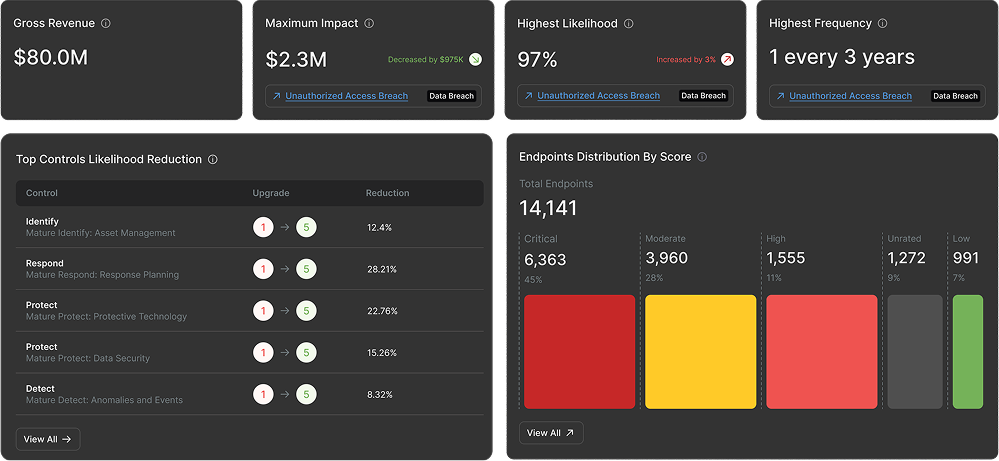
Most CTEM tools rely on periodic scans or manual attestations. PTEM continuously measures whether controls are enforced and functioning using live telemetry. When controls drift or fail, the system surfaces impacted assets and prioritizes fixes by financial impact — turning CTEM from a quarterly exercise into a continuous program.
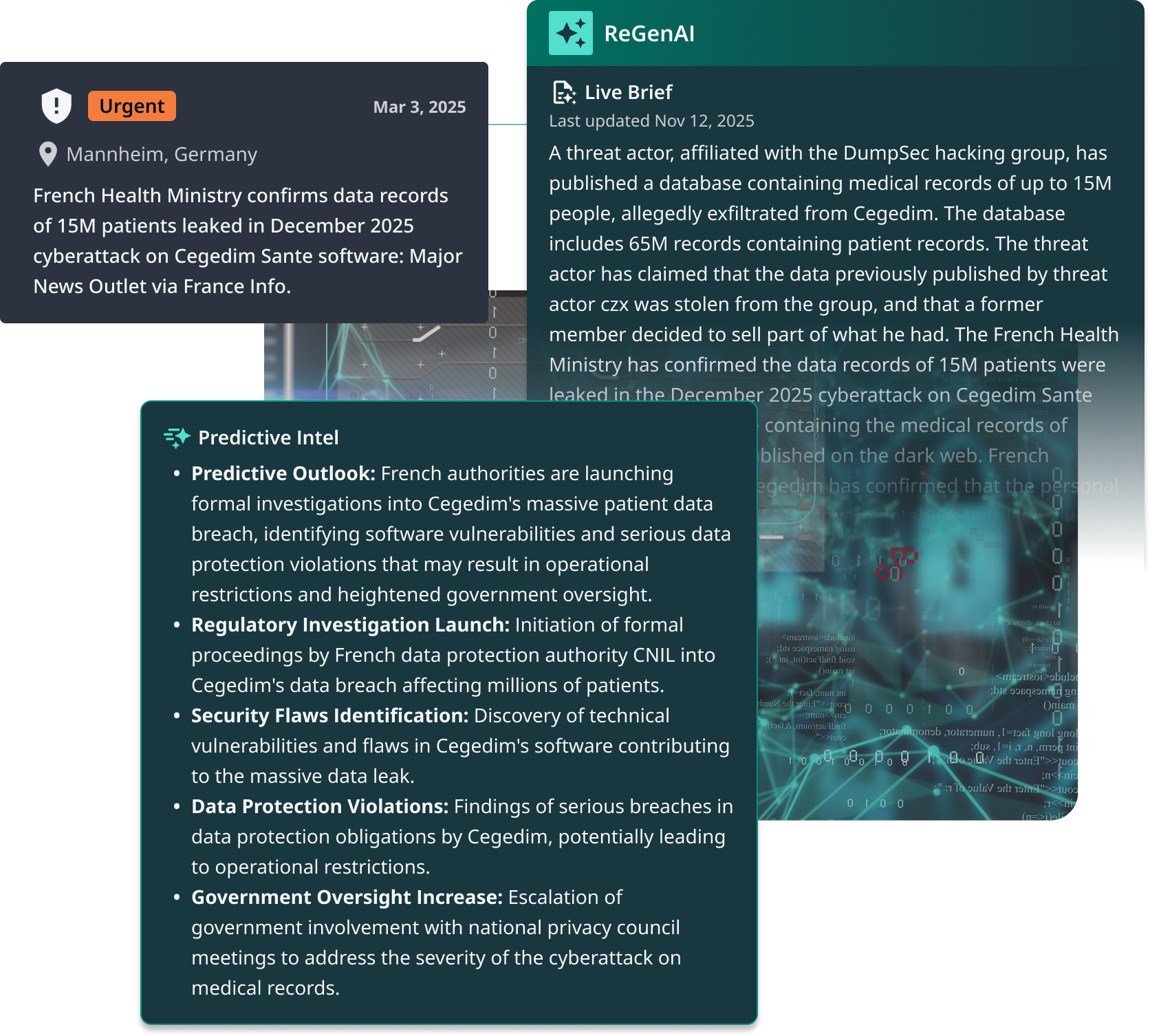
Prediction without quantification creates awareness, not action. PTEM evaluates forecasted threats in financial terms so organizations proactively mitigate the exposures most likely to cause material loss — shifting from reactive defense to economically driven risk prevention. Leaders get evidence to justify budget, not just dashboards to explain posture.
CVSS ranks severity by technical characteristics — ignoring compensating controls, real exposure, and business context. PTEM ranks by dollars at risk, factoring in exploitability, control effectiveness, and asset criticality. In our 2026 report, a CVSS 7.0 CVE ranked “High” while a CVSS 9.0 ranked “Moderate” — financial impact told a different story.
A vulnerability is only an exposure if that CVE exists on your endpoints and isn’t covered by a compensating control. PTEM closes that gap.
Yes. PTEM measures how remediation actions change expected loss over time — not just posture metrics. As controls are strengthened, risk recalculates automatically, showing measurable reduction in expected financial loss. This turns security from activity reporting into outcome accountability, giving leaders defensible evidence to justify priorities and tradeoffs.