Across North America, transportation security leaders are heading into the 2026 FIFA World Cup with detailed match-day plans—and a shared concern that those plans won’t cover everything that actually happens. Transportation risks aren’t limited to what’s on the schedule. They also develop because of a goal scored, a loss felt too hard, or a cyber threat lurking in the dark web.
Preparing for unplanned events is something transportation agencies across North America are actively working on. Here’s how they’re doing it.
The Scale Is Unprecedented
The 2026 FIFA World Cup runs June 11 through July 19, spanning 104 matches across 16 host cities in the U.S., Canada, and Mexico. It is, by every measure, the largest sporting event ever hosted on North American soil. The Federal Transit Administration has responded by investing $100.3 million into public transit systems in host cities, and agencies from Los Angeles to New Jersey are deep in match-day planning—many of whom began that work 1.5 to 2 years ago.
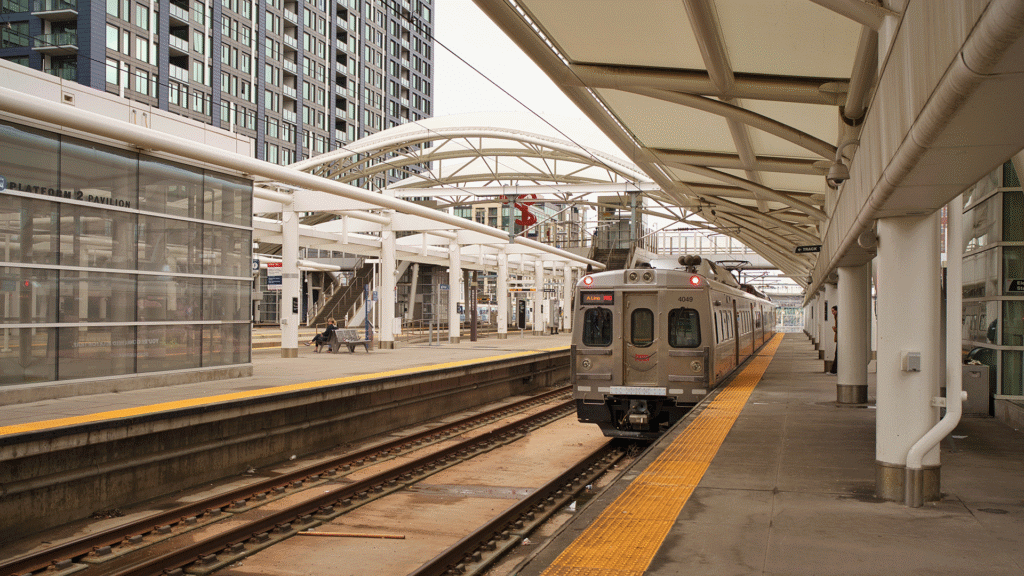
LA Metro plans to begin bus service to Los Angeles Stadium up to three hours before kickoff, coordinating with more than 10 regional transit providers. NJ Transit (NJT) has announced a regional stadium mobility plan, with security checkpoints at Penn Station, Secaucus, and MetLife Stadium, and zero general spectator parking on stadium property.
The scale of that mobility plan comes into focus in the numbers. Public transit is expected to be the primary mode of transportation to and from matches, with an estimated 40,000 fans taking NJT per game—approximately 28,000 of those traveling from New York. Average total game attendance is projected at 80,000. In addition to NJT service, buses and dedicated shuttles will be deployed.
The logistics are being handled. But transportation agencies know from experience that the logistics aren’t the only hard part.
What Agencies Are Preparing For—And Why It’s More Than Just Scheduled Matches
Transportation security leaders in World Cup host cities are tracking a set of risks that goes well beyond transit capacity.
Transportation overcrowding. Beyond scheduled match demand, agencies are focused on the unpredictable behavior of fan crowds—particularly post-match, when emotions run high. Dataminr First Alert’s real-time event, threat, and risk intelligence often detects the earliest signals of public safety incidents —enabling agencies to proactively deploy resources and get ahead of developing situations before conditions escalate.
Given that transit platforms and station choke points can be overwhelmed in minutes, transportation agencies are keenly aware that minutes and seconds make a difference when responding and protecting public safety.
Cyber threats to physical infrastructure. A DOS attack on transit signage systems, a disruption to traffic light coordination near a stadium, a compromise of ticketing infrastructure—these aren’t hypothetical scenarios. They’re the kinds of events that could cause massive disruption to World Cup fan movement.
According to the Center for Internet Security, “Attacks on rail infrastructure during the most recent Olympic Games underscore how transportation infrastructure can be accessible targets for actors seeking to disrupt high-visibility events without directly breaching venues or stadium security.”
Cross-city awareness. If a serious incident happens in Dallas during a group stage match, agencies in Miami want to know about it before the semifinal match kicks off. The ability to monitor across all host cities—and understand whether an event is indicative of a larger pattern or trend —is a meaningful operational advantage to enable agencies to proactively respond within their own jurisdictions.
Disease monitoring. With fans traveling from dozens of countries, agencies are leveraging Dataminr to monitor for any disease outbreaks from around the world to help anticipate public health risks that could impact host cities.
Bomb threats and swatting attempts. Transportation agencies are also preparing for bomb threats or swatting attempts directed at or near match-adjacent transportation infrastructure. The United States Department of Homeland Security and FBI recently warned that large scale events are prime targets for threats of violence. Most such incidents go unfounded—but each threat demands a coordinated, multi-agency response that consumes significant resources under time pressure. The priority is ensuring teams receive actionable early warning fast enough to mitigate risk.
The Tool, the Toolbox, and the Common Picture
Something the Dataminr team is clear-eyed about: First Alert is one tool among many that transportation agencies are using during the World Cup. For kinetic events at or nearby to transportation locations—altercations, incidents, physical disruptions—Dataminr often surfaces real-time signals before any other source. And that’s where Dataminr earns its place in the stack.
But the operational value that keeps coming up in these customer conversations isn’t about any single alert. It’s about what happens when multiple agencies all receive the same early signal from Dataminr about a developing situation at the same time. When that happens, they can accelerate coordination and response, without needing to spend additional time bringing everyone up to speed. Dataminr enables customers to begin their conversations in the middle, representing an invaluable time advantage.
That’s what the transportation security community calls a common operating picture. And during a six-week event spanning 16 cities, the extra minutes and seconds afforded by that unified view matter.
Receive AI-Powered, Real-Time Alerts for Transportation and Infrastructure Protection
Improve response time to transportation accidents and critical infrastructure disruptions to better protect the public.
Learn More