
Overview
- City: New York, NY (and surrounding metropolitan area)
- Assessment Period: June 19, 2026 – July 19, 2026
- Key Infrastructure: Penn Station, Grand Central Terminal, Port Authority Bus Terminal, Red Hook Container Terminal, LaGuardia Airport (LGA), John F. Kennedy International Airport (JFK), Newark Liberty International Airport (EWR), Port Newark Container Terminal, MetLife Stadium.
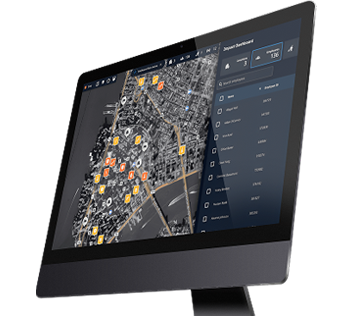
Make faster, data-driven decisions to protect people and infrastructure with Dataminr and Esri | Learn More
Executive Summary
Operational friction within the New York metropolitan transit network intensified significantly due to concurrent high-impact events, including the FIFA World Cup 2026 tournament and localized America250 multi-day celebrations. Mass spectator aggregations and civic activities overlapping the July 4th holiday weekend placed heavy demand on primary transport nodes, exposing critical structural vulnerabilities and capacity constraints. This baseline stress was further aggravated by extreme environmental factors, including an Extreme Heat Warning that enveloped the region over the holiday weekend and dense wildfire smoke that threatened stadium operations in July.
Coordinated tactical deployments managed severe crowd congestion and mitigated acute threat vectors near central logistical hubs, including Penn Station and MetLife Stadium. Law enforcement and transit operators instituted temporary checkpoint controls, restrictive rail service mandates, and localized street detours to preserve terminal safety compliance. Despite these proactive interventions, there were still a series of compounding incidents that led to multi-modal disruptions.
Transportation & Infrastructure Analysis (Last 30 days)
Traffic & Highways
- Route-120 Stadium Congestion: High vehicle volumes during major soccer matches caused severe traffic delays at the intersection of Meadowlands Parkway and Route-120 in Secaucus, choking primary roadway arterials serving MetLife Stadium.
- Hamilton Avenue Freight Delays: Sustained traffic congestion near the intersection of Hamilton Avenue and Atlantic Avenue restricted commercial freight routing along the immediate approaches to the Red Hook Container Terminal.
- Lincoln Tunnel Expressway Closure: A stalled vehicle near the intersection of the Lincoln Tunnel Expressway and the Toll Plaza caused sudden lane closures, creating extensive gridlock for westbound interstate traffic.
Aviation
- LaGuardia Domestic Ground Stops: Multi-hour ground stops were implemented at LaGuardia Airport on July 19, 2026, due to regional thunderstorm cells and severe volume constraints, delaying domestic flight arrivals and departing airline networks.
- Newark International Holding Patterns: Severe convective weather on July 18, 2026, forced aircraft into extended holding patterns en route to Newark Liberty International Airport, disrupting flight schedules for multiple major commercial carriers and air cargo operators.
- Airport Perimeter Violence: An armed carjacking occurred at the perimeter intersection of 94th Street and 23rd Avenue near LaGuardia Airport, necessitating an immediate tactical law enforcement response and strict security monitoring of surrounding terminal corridors.
Rail & Transit
- Penn Station Transit Restrictions: Massive World Cup spectator crowds blocked internal concourses at Penn Station, prompting New Jersey Transit to restrict rail access exclusively to ticketed tournament travelers between 10:24 and 14:14 on July 19, 2026.
- Madison Square Garden Blockades: Broad fan celebrations ahead of the tournament final on July 19, 2026, physically blocked the street level outside Madison Square Garden, forcing municipal bus line detours and extensive pedestrian zoning.
- Secaucus Junction Schedule Alterations: Heavy passenger volume following the conclusion of matches on July 19, 2026, forced emergency schedule adjustments and last-train mandates departing Secaucus Junction on the Main-Bergen Line in East Rutherford.
Maritime
- Corbin Street Commercial Restrictions: Planned overnight lane closures from 18:00 to 04:00 on July 14, 2026, on Corbin Street southbound between Kellogg Street and Marsh Street disrupted heavy vehicle staging near the Port Newark Container Terminal.
- Red Hook Arterial Blockages: Roadway closures near the intersection of Pier 12 and Interstate 278 directly limited secondary access roads supporting the Red Hook Container Terminal footprint on July 19, 2026.
- North Avenue Bridge Closure: A multi-hour security response and police activity on the North Avenue Bridge eastbound in Elizabeth restricted a major commercial transport corridor connecting to regional shipping hubs on July 11, 2026.
Utilities
- Grand Central Gas Anomalies: Multiple gas odor reports and automated detector activations on the 220 block of East 46th Street and the 830 block of 2nd Avenue triggered emergency closures near Grand Central Terminal on July 19, 2026.
- Penn Station Grid Instability: A structural explosion on the 330 block of West 34th Street coupled with an electrical equipment failure at The Olivia complex on the 310 block of West 34th Street disrupted the localized power grid on July 19, 2026.
- Regional Telecommunications Outages: Widespread digital connectivity dropouts impacted Verizon Fios and wireless networks across the metropolitan area, disabling streaming capabilities, remote data tools, and electronic ticketing systems during peak holiday and soccer match windows on July 19, 2026.
Transportation & Infrastructure Analysis (Last 6 months)
World Cup-driven security surge: Police/security-related alerts nearly doubled between February and June, with a visible spike tied directly to Madison Square Garden and Penn Station security screening around World Cup matches in mid-June, plus a bomb threat at MetLife Stadium following the Brazil–Norway match in early July.
Total aviation alert volume rose sharply into the July 4th holiday week: Volume increased roughly 58% and then another ~115% across the two weeks leading into July 4th week, then dropped about 36% the week after.
Penn Station and Grand Central remain the consistent hotspots: Across the full window, these two hubs accounted for the large majority of suspicious-package and infrastructure-related alerts, with activity concentrated in April–May rather than only around the World Cup window.
Key Infrastructure
EWR Airport
Storm-driven holding patterns; in-flight cockpit-access assault incident; smoke detected at nearby complex.
Localized gate delays; law enforcement metered arrivals for security incident; minor cargo supply chain friction.
Grand Central Terminal
Gas odor reports/detector activations nearby; attempted assault near transit access; theft nearby.
Street closures on Lexington/34th disrupted transit and deliveries; pedestrian rerouting for utility inspections.
JFK Airport
Minor holding patterns during peak travel; secondary road congestion from summer travel demand.
ATC metered arrivals for safety margins; minor ground transport delays; throughput remained stable.
LGA Airport
Weather/volume-driven ground stops; armed carjacking at perimeter; police helicopter activity after gunfire reports.
Rolling delays rippled through domestic network; shuttle/vehicle diversions near 94th St; tightened access protocols.
MetLife Stadium
Massive World Cup crowds; transit schedule adjustments for post-game surges; bomb threat investigated; vehicle thefts nearby.
Prolonged road closures/congestion near stadium; stalled vehicles created bottlenecks; transit capacity shifted to event traffic.
Penn Station
Fan crowds blocked MSG/station access; explosion and power outage nearby; suspicious packages triggered bomb squad response.
NJ Transit access limited to ticket holders; major intersections closed, forcing bus detours; rolling rail delays during platform sweeps.
Port Authority Bus Terminal
Event-driven road closures; gas odor introduced fire risk; planned fireworks event.
Bus routing adjustments from blocked egress corridors; longer commute times; pedestrian zoning near gas leak.
Port Newark Container Terminal
High shipping-season stress; overnight construction restrictions; security alerts on nearby bridges.
Traffic diverted during overnight closures; freight pushed to secondary routes; bridge security caused truck backups.
Red Hook Container Terminal
Heavy traffic on access corridors; explosion at nearby construction site; power outage and gas detector activation nearby.
Freight delays to Prospect Expressway/I-278; altered gate-approach routes near Pier 12; secondary bottlenecks from utility/construction incidents.
Cyber-Physical Spotlight
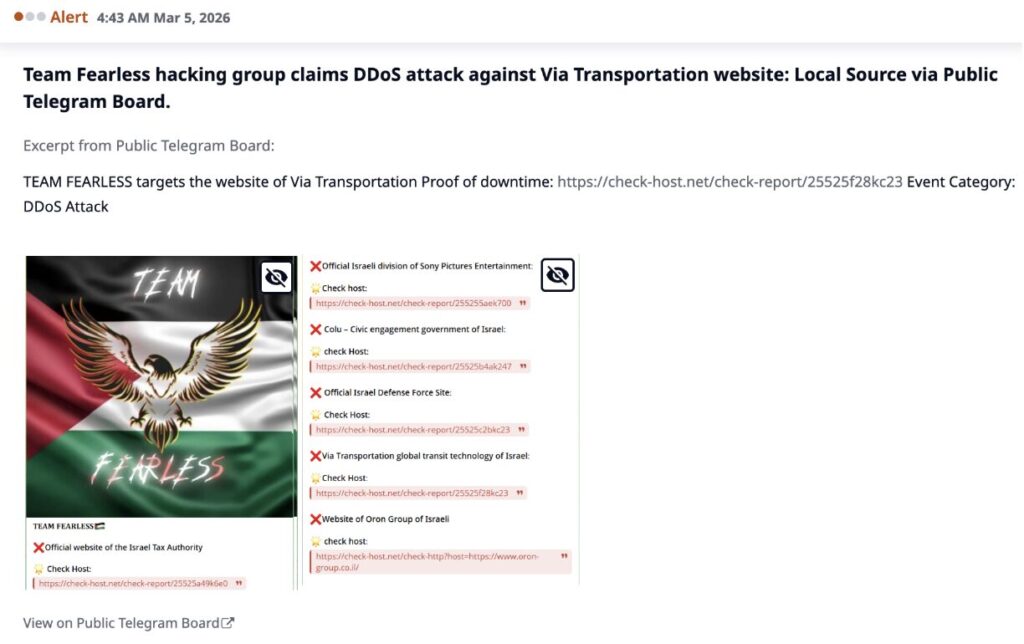
New York Transit Infrastructure Cyber Incidents: The Transport Workers Union (TWU) Local 100—which represents over 46,000 transit workers operating the New York City subway and bus networks across major metropolitan hubs like Grand Central Terminal and Penn Station—notified regulatory authorities of a significant external systems breach that directly compromised sensitive infrastructure data and personal records impacting 46,400 individuals.
Priority Risk Indicators
- Coordinated Air Cargo and Transit Blockades: Staging patterns of unauthorized vehicles or sudden fan aggregations near primary airport access roads and major rail terminals indicate imminent transit disruption.
- Infrastructure Copper and Cable Theft: Increased frequency of utility door tampering or sudden localized power failures near subterranean rail lines map out high-frequency target zones for asset degradation.
- Risk Profile: Detection of localized public safety incidents or physical obstructions within major hubs signaling an elevated risk of terminal-sector violence and operator disruption.
About the Risk Report
Dataminr is the global leader in AI-powered real-time intelligence, delivering the earliest actionable indicators of breaking events, emerging threats, and unexpected risks by leveraging 60+ specialized large language models (LLMs) and over 13 years of trusted historical data to instantly synthesize information from 1.2M+ publicly available data sources in 150+ languages across text, image, audio, video, and sensor data.
This report is an AI-powered retrospective risk assessment using data surfaced by the platform. The information illustrates the types of hyperlocal events and risks Dataminr detects in real-time. It is not a representation of Dataminr’s real-time intelligence products.

Turn Public Data into Action
Gain critical context and increase decision-making speed with AI-Powered Real-Time, Event, Threat & Risk Intelligence.
REQUEST A DEMO