Overview
- City: London, UK
- Assessment Period: June 19, 2026 – July 19, 2026
- Key Infrastructure: London Waterloo Station, London Heathrow Airport (LHR), St Pancras International Station, London City Airport (LCY), London Gatwick Airport (LGW), Port of Tilbury, DP World London Gateway, London Stansted Airport (STN).
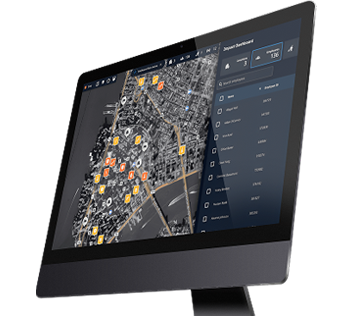
Make faster, data-driven decisions to protect people and infrastructure with Dataminr and Esri | Learn More
Executive Summary
London’s transit network vulnerabilities were driven primarily by extreme weather volatility, subsurface utility work, and asset degradation across high-capacity transit corridors. Record-breaking June heat reaching 35.7°C caused extensive structural rail buckling, while severe convective thunderstorms produced flash flooding that inundated major aviation terminals and underground tunnels. These environmental shocks compounded existing surface friction from long-duration water pipeline replacements and highway rehabilitation near central transport nodes, exposing significant redundancy gaps in the metropolitan logistics network.
Emergency response and tactical police interventions concentrated on securing transport perimeters against signaling cable theft, terminal public safety incidents, and trackside trespass. Heavy rail corridors through London Waterloo Station and St Pancras International Station saw recurring shutdowns from deliberate copper theft and safety inspections. Major aviation hubs faced prolonged multi-hour departure holds and widespread inbound diversions from terminal equipment failures and airfield flooding.
Transportation & Infrastructure Analysis (Last 30 days)
Traffic & Highways
- Arterial Highway Capacity Reductions: Construction near Birdcage Walk and Westminster, Horse Guards Road, and the A118/Crescent Road junction in Upton restricted lane availability and created persistent bottlenecks for commercial freight carriers.
- Subsurface Infrastructure Bottlenecks: Water pipeline remediation and utility excavation near Eversholt Street and the A40 at Bloomsbury forced emergency lane closures and multi-mile vehicle queues across the central corridor.
- Collision-Induced Route Diverting: A four-vehicle collision on the M3 near Junction 7 and a crash at Back Hill and EC1 closed roadways for hours, forcing logistics traffic onto secondary local roads.
Aviation
- Airspace Congestion and Holding Patterns: Convective weather and operational bottlenecks forced commercial arrivals — including Virgin Atlantic, British Airways Flight, and Etihad Airways — into extended holding patterns en route to London Heathrow Airport.
- Weather-Driven Terminal Ground Stops: Severe summer thunderstorms and heavy rainfall delayed over 700 flights by up to 11 hours and prompted an immediate arrivals suspension at Gatwick Airport and Heathrow Airport.
- Tactical Perimeter Security Intercepts: Border enforcement and immigration officers executed tactical operations within Gatwick Airport’s commercial footprint, resulting in the arrest of multiple logistics personnel.
Rail & Transit
- Heavy Rail Track Defects: Structural track geometry failures between Harrow-on-the-Hill and London Marylebone prompted immediate speed restrictions and cascading train cancellations across regional rail links.
- Mechanical Station Closures: Escalator faults at Angel Station and lift failures at Royal Victoria DLR Station triggered entrance closures and restricted step-free access at key transit junctions.
- Environmental Tunnel Flooding: Flash flooding inside low-lying sections of the London tube network, combined with signaling system failures, forced the immediate suspension of four core London Underground lines.
Maritime
- Intermodal Supply Chain Delays: Marine cargo handling and freight transfers at the Port of Tilbury faced downstream delays from road closures on Dock Approach Road and Chadwell St Mary.
- Dockside Security Deployments: Port authority police and tactical units increased patrols around Royal Victoria Dock following emergency recovery operations on Silvertown Way.
- Perimeter Crime Interceptions: Maritime law enforcement conducted targeted sweeps near port access roads in Gravesend, seizing illegal items, cash, and weapons from individuals operating near shipping channels.
Utilities
- Subsurface Pipeline Ruptures: Major water main bursts and emergency repairs near Wellington Street in Gravesend forced total roadway closures and altered local water distribution to port facilities.
- Telecommunications Grid Stress: Digital telemetry and communications networks experienced localized dropouts near the Port of Tilbury due to commercial ISP outages and service degradation.
- Signaling Cable Interruptions: Property damage targeted rail line assets between King’s Cross and Hull, stealing trackside signaling cables and severing real-time transit data feeds.
Transportation & Infrastructure Analysis (Last 6 months)
Tactical Deployments Declined: Police and armed-response alerts across rail perimeters fell 62.1% between May and July 2026, with trespassing incidents ticking up off a small base and cargo-related incidents remaining negligible across both months.
Weather Disruptions Pulled Back: Combined power-outage, heat-wave, and weather-driven disruption alerts fell 85.7% from June into July 2026, concentrated on the King’s Cross–Edinburgh corridor and St Pancras.
Volume Rose on Routine Activity: Total transportation alert volume rose 41.4% between April and July 2026, driven by routine construction and road-closure activity.
Key Infrastructure
LGW Airport
Severe thunderstorms caused multi-hour ground stops; immigration enforcement sweep led to multiple arrests.
700+ flights delayed, arrival slots suspended; police vehicle collision caused gridlock at Radford/Balcombe; cargo staffing shortfalls.
LCY Airport
Police cordon after a stabbing in nearby Woolwich; witness appeal saturated surrounding routes; minor grid instability.
Traffic diverted from surface routes; bus/logistics delays near perimeter; heightened gate screening.
DP World London Gateway
Ongoing port surveillance for cargo theft; border compliance checks on containers; minor road works nearby.
Increased freight processing times from inspections; extended gate queues; minor rail transfer sequencing changes.
LHR Airport
Flash flooding disrupted Terminals 2/3/4; airspace congestion; fatal stabbing on A4 in Cranford.
Flooding halted inter-terminal transit and rail links; stacked international arrival delays; A4 closure trapped buses/logistics vehicles.
London Waterloo Station
Flood warning near Thames; record June heat (35.7°C) stressing infrastructure; track trespass/cable theft causing power cuts.
Four Underground lines suspended; terminal outlets closed due to heat; cascading delays on southwest-bound services.
Port of Tilbury
Wellington Street closed for water pipe repairs; internet outages hit port comms; weapons/cash seized near Gravesend boundary.
Trucks rerouted, delaying freight; manual container tracking during outages; short delays at check-in gates from security sweeps.
St Pancras International
Extreme heat cancelled Eurostar services; utility works on Eversholt Street; signaling cable theft.
Eurostar cancellations caused concourse crowding; street works caused gridlock; cable theft forced manual spacing, delaying domestic trains.
STN Airport
Regional rail/coach service gaps; increased cargo security sweeps; routine perimeter monitoring.
Crew arrival delays from transit gaps; extended freight processing windows; minor queues from gate monitoring.
Cyber-Physical Spotlight
Transport for London (TfL) Cyberattack Update: In March 2026, a comprehensive security and forensic audit provided an updated assessment of a previous cyber incident targeting Transport for London (TfL)—the government body operating the transit network serving international hubs like Waterloo, King’s Cross, and London Bridge.
Newly verified analysis of the exfiltrated datasets officially confirmed that the breach was larger than initially documented, ultimately impacting approximately 10 million passengers. The compromised information included customer-facing database records containing names, physical addresses, telephone numbers, and email accounts, along with the exposed banking and refund details of roughly 5,000 commuters, prompting a complete infrastructure security overhaul across the transit authority’s digital network.

Priority Risk Indicators
- Coordinated Air Cargo and Transit Blockades: SOC operators should monitor truck staging patterns, breakdowns, or unusual physical assemblies near primary airport perimeter gates and freight entrance lanes to preempt coordinated logjams.
- Infrastructure Copper and Cable Theft: Enhanced CCTV monitoring and physical patrols should be directed toward low-visibility rail lines, trackside signaling bungalows, and subsurface utility vaults where high-value copper cable is exposed to opportunistic theft.
- Extreme Weather and Subsurface Infrastructure Cascades: Operations teams should monitor real-time weather alerts (heatwaves or heavy convective rainfall) alongside utility work zones near core hubs like Waterloo, St Pancras, and Heathrow.
About the Risk Report
Dataminr is the global leader in AI-powered real-time intelligence, delivering the earliest actionable indicators of breaking events, emerging threats, and unexpected risks by leveraging 60+ specialized large language models (LLMs) and over 13 years of trusted historical data to instantly synthesize information from 1.2M+ publicly available data sources in 150+ languages across text, image, audio, video, and sensor data.
This report is an AI-powered retrospective risk assessment using data surfaced by the platform. The information illustrates the types of hyperlocal events and risks Dataminr detects in real-time. It is not a representation of Dataminr’s real-time intelligence products.

Turn Public Data into Action
Gain critical context and increase decision-making speed with AI-Powered Real-Time, Event, Threat & Risk Intelligence.
REQUEST A DEMO