
Overview
- City: Berlin, Germany
- Assessment Period: June 19, 2026 – July 19, 2026
- Key Infrastructure: Berlin Ostbahnhof, Berlin Südkreuz, Port of Berlin Westhafen, Berlin Hauptbahnhof, Berlin Brandenburg Airport (BER)
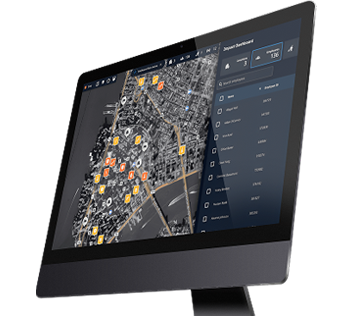
Make faster, data-driven decisions to protect people and infrastructure with Dataminr and Esri | Learn More
Executive Summary
Operational friction across the metropolitan area was driven primarily by targeted infrastructure disruptions, public safety interventions, and critical utility failures. Water pipeline breaches near Marie-Elisabeth-Lüders-Straße and Tauentzienstraße forced emergency road closures, while recurring gas leaks in Charlottenburg and Tempelhof presented safety hazards near key commercial arteries. Meanwhile, tactical police operations near regional hubs created friction for freight and commuter transit networks.
Coordinated responses at primary logistics hubs point to a rising risk profile for the region’s transport architecture. Police interventions at Hardenbergplatz and Zoologischer Garten station triggered extensive cancellations and delays on rail lines S3, S5, S7, and S9, underscoring the vulnerability of intermodal terminals to sudden security incidents. Combined with recurring holding-pattern delays at Berlin Brandenburg Airport and maritime emergencies along the Spree River corridors, these compounding factors make continued cascading delays and localized asset disruption likely across commercial transit networks.
Transportation & Infrastructure Analysis (Last 30 days)
Traffic & Highways
- B5 and Bachstraße Construction Blockages: Ongoing construction and multi-lane closures at the B5/Bachstraße intersection have reduced roadway capacity, slowing primary arterial flow into the city center.
- Sachsendamm and A100 Restraints: Construction bottlenecks on the A100 and adjoining corridors at Sachsendamm are causing recurring lane closures, delaying freight transfers on southern transit routes.
- Leibnizstraße and Kantstraße Closures: Structural engineering work has forced full road closures near Leibnizstraße and Kantstraße, diverting commercial traffic onto secondary roads and increasing local gridlock.
Rail & Transit
- Hardenbergplatz Tactical Closures: Law enforcement responses to security threats at Hardenbergplatz forced train cancellations and delays across commuter lines S3, S5, S7, and S9, severing key west-east transit links.
- Westhafen Station Medical Emergencies: Medical emergencies requiring immediate first-responder deployment at Westhafen station triggered suspension of high-frequency Ringbahn service on lines S41 and S42.
- Oranienburger Straße Signal Failures: Signal infrastructure failures and emergency repair work on Oranienburger Straße caused extensive delays and cancellations on lines S1, S2, and S25.
Aviation
- Holding Pattern Delays at BER: Multiple commercial flights — including Eurowings, EasyJet, and SunExpress — experienced extended holding patterns and diversions en route to Berlin Brandenburg Airport, straining regional airspace management.
- Terminal Assaults and Law Enforcement Disruptions: Police launched tactical investigations after assaults on officers during the arrest of a foreign national inside the airport terminal.
- Security Operations: Border security operations disrupted terminal activity following the seizure of 16 kg of ketamine and the arrest of a suspect carrying vacuum-sealed illicit chemicals within the terminal perimeter.
Maritime
- Spree River Oberbaumbrücke Rescue Emergency: Emergency maritime units responded near Oberbaumbrücke after a civilian fell into the Spree River, prompting temporary speed restrictions on commercial river traffic.
- Tempelhof Harbor Lethal Incident: Water police conducted a recovery operation at Tempelhof Harbor after a deceased male was found in the water, halting local dock operations.
Utilities
- Marie-Elisabeth-Lüders-Straße Water Pipeline Breaches: Recurring water pipeline ruptures near Marie-Elisabeth-Lüders-Straße forced emergency road closures and disrupted traffic near government districts.
- Charlottenburg and Tempelhof Gas Leaks: Gas line leaks detected in Charlottenburg and Tempelhof required emergency cordon zones, halting surface transit and forcing localized evacuations.
- Pankstraße Structural Water Damage: A water main burst on Pankstraße damaged over 1,000 commercial items at a regional furniture facility, illustrating grid vulnerabilities.
Transportation & Infrastructure Analysis (Last 6 months)
Westhafen-Area Roadway & Event Disruption Activity Declines: Disruption activity in the Port of Berlin Westhafen monitoring zone dropped roughly 9% over the measured window, driven mainly by a pullback in public-event-related road impacts near central Berlin landmarks (Unter den Linden, Wilhelmstrasse, Nollendorfplatz), with smaller contributions from fewer road closures and lighter traffic-delay activity on arterial corridors. Note: this hub’s geo-radius captures general road-network activity across central Berlin rather than port-specific operations, so the decline reflects citywide street-level disruption trends more than port activity itself.
Road Closures and Construction: Road closures and construction together made up 69.9% of all transportation alerts between May 31 and July 23, 2026. Monthly volume jumped from May into June, then eased back 28.1% from June into July.
Traffic Delays Declining Faster Than Overall Volume: Traffic delay alerts fell at a steeper rate than total alert volume month-over-month — dropping as a share of monthly alerts from 14.0% in June to 9.9% in July, even as total alerts declined 28.1% overall.
Key Infrastructure
Berlin Brandenburg Airport
Security breaches, assaults on officers, stalker arrests; past rail incidents from emergency braking triggers.
Flights held/diverted; terminal processing delays; airport-to-city rail transfers hampered.
Berlin Hauptbahnhof
Frequent fire department deployments disrupting central rail corridors; heavy road restrictions nearby.
Rolling delays between Beusselstraße and Hbf; closures near Friedrich-List-Ufer push commuters to buses.
Berlin Ostbahnhof
Public safety incidents (stabbings near Görlitzer Park, past shooting on Warschauer Straße) driving police response.
Pedestrian access restricted during police cordons; bus/light rail detours; elevated risk to transit staff/riders.
Berlin Südkreuz
A100/Sachsendamm construction limiting vehicle access; signaling faults on connecting rail lines.
Vehicle queues on southern bypass routes; S2/S25/S26 delays reduce peak-period passenger throughput.
Port of Berlin Westhafen
Water pipeline breaks, storm-related electric shock, and police operations near defense manufacturing sites.
Freight rerouted to Stromstraße/Paulstraße; S41/S42 Ringbahn rail movements restricted, disrupting cargo transfers.
Cyber-Physical Spotlight
Germany Rail Radio System Malfunction: A nationwide failure of Deutsche Bahn’s GSM-R radio system — used for safety-critical communication between drivers and control centers — halted rail traffic across Germany on June 23. Trains were held at stations for roughly two hours before service gradually resumed. DB attributed the failure to scheduled replacement of a technical component; no cyberattack or infrastructure damage was involved.
Priority Risk Indicators
- Coordinated Transit and Arterial Blockades: Monitoring of decentralized digital channels and assembly patterns for signs of intent to deploy physical obstructions at key highway junctions or defense logistics facilities.
- Infrastructure Copper and Cable Theft: Tracking of high-frequency tampering trends and grid failures across vulnerable rail signaling corridors, particularly lines S1, S2, and S25.
- Hub Risk Profile Elevation: Detection of public safety incidents, weapon-possession trends, and tactical police responses within the immediate perimeters of Görlitzer Park and primary rail stations.
About the Risk Report
Dataminr is the global leader in AI-powered real-time intelligence, delivering the earliest actionable indicators of breaking events, emerging threats, and unexpected risks by leveraging 60+ specialized large language models (LLMs) and over 13 years of trusted historical data to instantly synthesize information from 1.2M+ publicly available data sources in 150+ languages across text, image, audio, video, and sensor data.
This report is an AI-powered retrospective risk assessment using data surfaced by the platform. The information illustrates the types of hyperlocal events and risks Dataminr detects in real-time. It is not a representation of Dataminr’s real-time intelligence products.

Turn Public Data into Action
Gain critical context and increase decision-making speed with AI-Powered Real-Time, Event, Threat & Risk Intelligence.
REQUEST A DEMO