
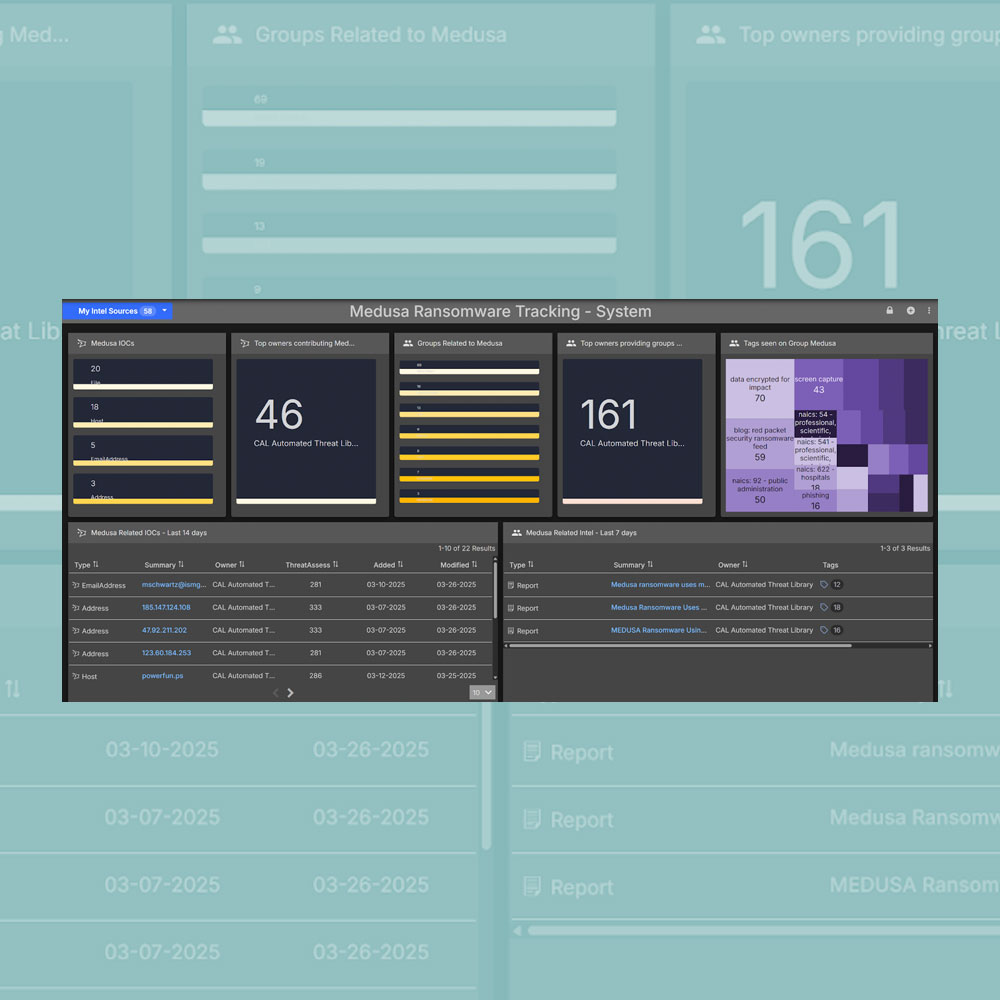
ThreatConnect’s (now a part of Dataminr) Medusa Ransomware Intelligence Dashboard provides security teams with real-time visibility into the latest activities, indicators, and trends associated with the Medusa ransomware threat group.
The dashboard aggregates intelligence from multiple sources, enabling analysts to proactively detect, track, and mitigate Medusa-related threats before they impact the organization.
Key Benefits of Medusa Intelligence Dashboard
- Centralized Intelligence — Consolidates Medusa-specific indicators of compromise (IoCs), tactics, techniques, and procedures (TTPs) from open-source intelligence, threat feeds, and internal telemetry.
- Real-Time Threat Tracking — Provides continuous visibility into Medusa’s evolving attack patterns, newly observed vulnerabilities, and victim targeting trends.
- Accelerated Investigation and Response — Supports rapid threat triage and operational response through enriched intelligence and contextual analysis.
- Customizable Reporting and Visualization — Delivers interactive charts, trend analysis, and campaign reporting tied to Medusa ransomware activity to support both operational teams and executive stakeholders.
- Automated Correlation Across Intelligence Sources — For organizations integrated with defensive technologies, automated workflows can correlate Medusa-related IoCs across adversary profiles, intrusion activity, reports, and emerging threats to help prioritize response and reduce operational risk.
By leveraging the Medusa Ransomware Intelligence Dashboard, organizations can strengthen threat visibility, improve response speed, and enhance resilience against ransomware activity.
What Is Medusa Ransomware?
Medusa is a ransomware-as-a-service (RaaS) operation first identified in June 2021 that targets organizations across multiple critical infrastructure sectors.
The group encrypts victim files and demands payment for decryption, while affiliates commonly use:
- Phishing campaigns
- Remote Desktop Protocol (RDP) exploitation
- Unpatched vulnerabilities
to gain initial access.
As of February 2025, more than 300 organizations had reportedly been impacted.
To reduce exposure, CISA recommends:
- Regular software updates and patching
- Network segmentation
- Traffic filtering and monitoring
- Strong access controls and credential hygiene
Additional indicators of compromise (IoCs) and defensive guidance are available in the full advisory.
Further Resources
For additional reporting and guidance related to Medusa ransomware activity, refer to the following resource:
- CISA Alerts: Timely information on cybersecurity threats, vulnerabilities, and defensive recommendations
It’s important to remain vigilant as ransomware operations continue evolving in scale and sophistication. Real-time intelligence, operational visibility, and faster prioritization are increasingly critical to reducing exposure and improving response readiness.
To gain access to the Medusa Ransomware Intelligence Dashboard, please contact your Customer Success representative.