
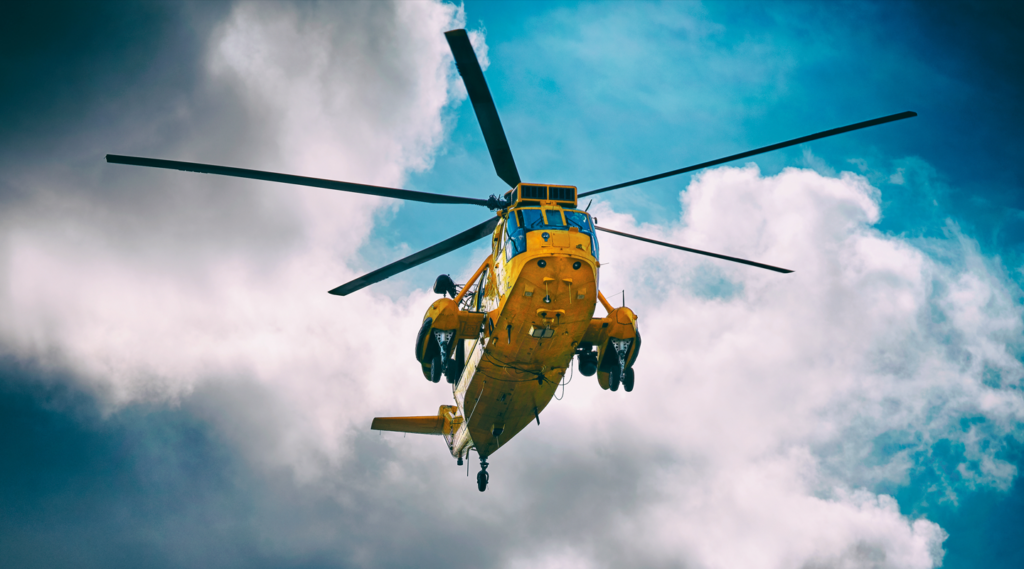
How and why real-time information is critical in enabling public sector organizations to serve their communities during crises and high-impact public safety events.
With nearly 80% of public sector leaders anticipating great disruption (e.g., economic uncertainty, geopolitical instability, energy reform) over the next five years, leaders across the public sector need access to reliable, actionable information, and better response and resilience strategies that enable them to quickly pivot when hit with a crisis or major disruption.
Natural disasters, cyber attacks, and infrastructure vulnerabilities have become increasingly frequent and unpredictable parts of operating in today’s world. Responding to crises quickly and effectively has become even more of an imperative for public sector organizations, and one that requires real-time information.
How does real-time information work?
Public sector organizations can harness the power of real-time information to ensure they know what is happening around the world and their local region—and that they know as soon as events occur. To better understand the value of the information received, let’s take a look at Dataminr First Alert.
For example, first responders and emergency management teams using First Alert get the earliest indications of breaking news events via real-time alerts. This gives them the critical lead time needed to enable the fastest real-time response. Think of these breaking news alerts as your first layer of crisis response.
Here are a few quick facts about how First Alert works:
- Delivers information in close proximity to the time at which events occur, sometimes within seconds or minutes of an occurrence
- Uses an industry-leading AI platform to process billions of units of public information daily
- Leverages more than 1 million public data sources, including social media, news outlets, government advisories, blogs, sensors, the deep and dark web, and audio transmissions
- Includes coverage at the global, regional, local, and hyper-local level in more than 150 languages
- Utilizes multi-modal fusion AI that fuses together multiple types of data (e.g., text, images, video, audio, etc), enables cross-modal reasoning, and captures real-time context of events
- Notifies users on the broadest range of breaking news and events that are often difficult to manually search for and identify
- Leverages Agentic AI Intel Agents to autonomously predict and answer the most relevant questions as the situation unfolds, adding critical context, relevant historical data, and deeper insights
The goal of First Alert is simple: to help public sector organizations discover and act on the earliest, most comprehensive signals about breaking news and high-impact events. By building an accurate picture of what’s happening on the ground during these critical incidents, First Alert enables them to significantly reduce response times, minimize damage and ultimately save lives.
Addressing Food Insecurity Using AI
In an effort to support the United Nation’s Sustainable Development Goal 2: Zero Hunger, Dataminr and its AI for Good partner Insecurity Insight built an AI solution focused on managing and detecting data on conflict-related violence. The team at Insecurity Insight can now leverage real-time information to identify food systems impacted by conflict. Once these events (e.g., closure of markets or infrastructure, bombings) have been detected, the collected data is shared with organizations focused on food security, enabling a more targeted intervention.
What are the benefits of real-time information?
Real-time information benefits organizations of all sizes and scope, including intergovernmental organizations, government agencies and NGOs, ensuring their response teams can:
- Provide the fastest real-time response
- Protect the safety of the communities they serve
- Maintain real-time visibility of events as they unfold, be it over the course of seconds, minutes, hours or days
- Identify unforeseen risks
- Accelerate cross-team understanding and cooperation to ensure resources and relief efforts are deployed efficiently
Real-time information is also critical in understanding the scale and scope of events, especially those both global and complex.
In April 2024, a severe weather outbreak with multiple devastating tornadoes ripped through parts of Oklahoma. First Alert assisted the Oklahoma Department of Emergency Management (OEM) by providing early indicators and immediate visibility into the situation as it unfolded. The solution prioritized essential information and highlighted critical data tied to key lifeline areas (e.g., safety, security, health, communications) and eliminated information silos. As a result, the OEM team was able to make quick, well-informed decisions, deploy assessment teams, and work in sync with federal partners.
In February 2025, real-time information became critical when Cyclone Alfred made landfall in Australia’s Northern Territory with heavy rainfall, high winds, and flooding. Dataminr’s ReGenAI offered real-time continuous updates of the cyclone, including landfall timing, road closures, and regional impacts.
Outside of extreme weather, real-time information can provide early warnings that give organizations time to put better defenses in place. In 2024, Dataminr advised a regional airport that another airport had recently been the victim of a DDoS attack, resulting in downtime. The forewarned regional airport was able to fortify their defenses to be better prepared when facing their own DDoS attack just eight minutes later.
Real-time information has become more valuable over the past several years thanks to our hyper-connected world, a proliferation of information, and the speed of data globalization. Twelve years ago, about 95 percent of Dataminr’s public information sources didn’t even exist. Today, we integrate more than 1 million public data sources into our AI platform – a number that continues to grow.
Public sector organizations that understand the need for, and importance of, real-time information can realize its full power. To inform. To educate. To safeguard the communities they serve as well as the critical infrastructure that supports them.
This article was originally published in June 2023. It has been updated with new information and examples.
Dataminr First Alert
Learn more about how public sector organizations use Dataminr First Alert to stay ahead of breaking news and high-impact events.
Learn more