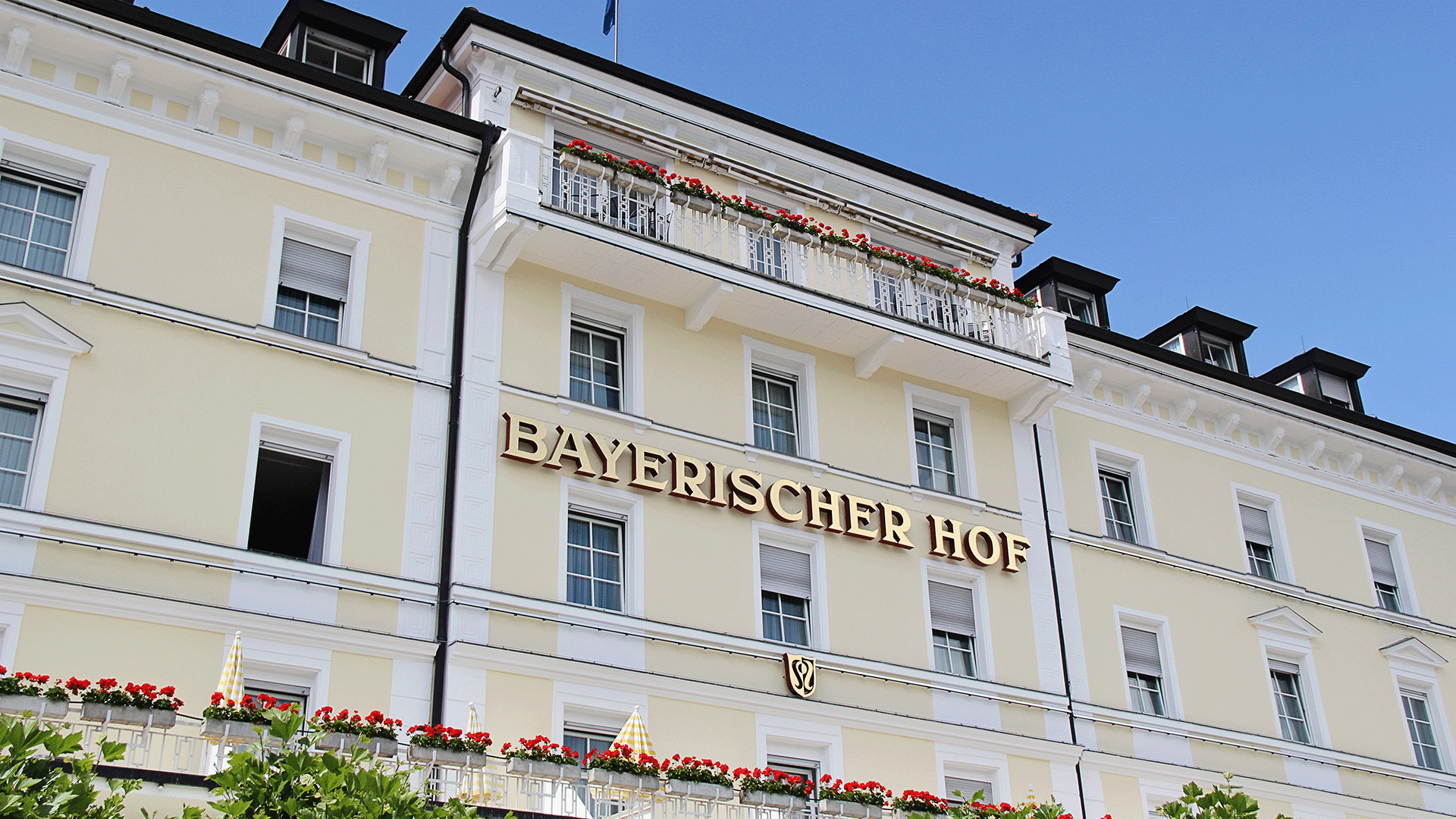
The dust is settling on the 2026 Munich Security Conference (MSC), but the “Munich Mood” remains palpable. As the global defence and national security community departs the Hotel Bayerischer Hof, we are not carrying a briefcase full of easy answers. Instead, we are leaving with something far more critical: alignment.
Heading into this year, the atmosphere was heavy. We have moved past the “peace dividend” of the 2010s into a period of stark realism. If 2025 was about recognising the “maths” of defence spending, insights from last year’s conference, 2026 was about the “physics” of response, and the Agentic AI required to master it. In a world where threats move at the speed of code, the “physics” of the battlefield—the velocity of incoming strikes, the mass of logistics, and the friction of disinformation—can only be managed through machine-speed insight. In an age of compressed decision-making, the side that uses AI to sense, understand, and act first holds the ultimate strategic advantage.
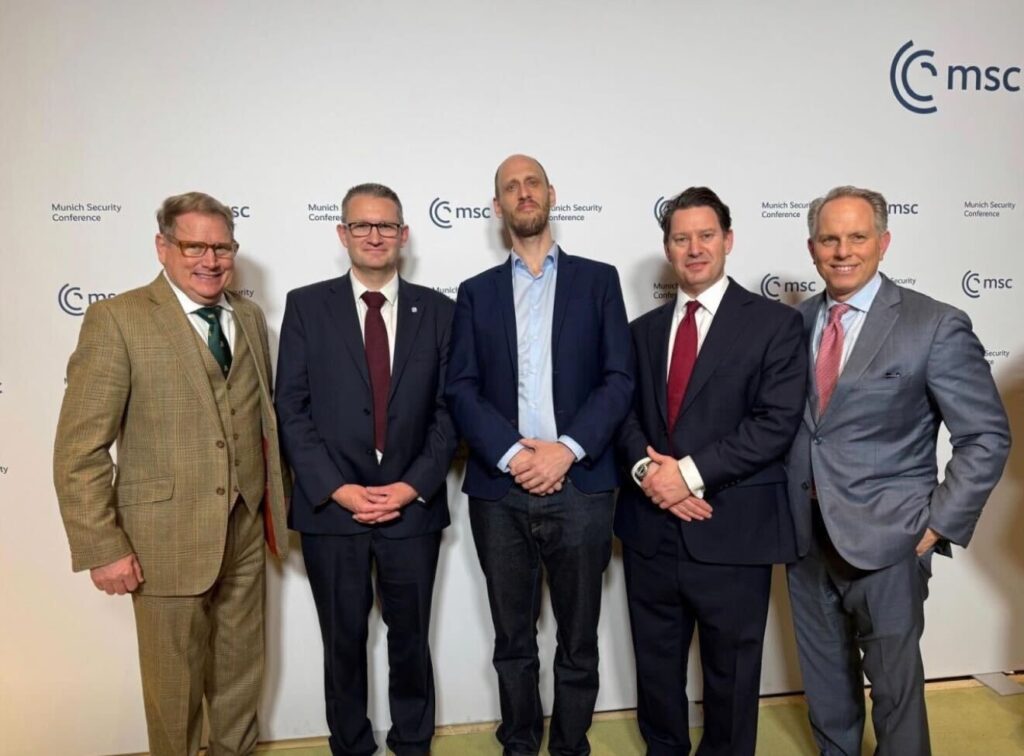
It was a privilege for our team to host a series of bilateral meetings with the leadership of the U.S. Department of War, U.S. European Command, and U.S. Africa Command, as well as defence and government leaders from NATO, the EU, UK, Germany, Italy, Israel, Poland, Romania, Czech Republic, Hungary, and Lithuania. It was also a pleasure to meet many more friends (new and old) in the corridors, side events and venues around the city.
World Leaders at Munich Security Conference: Reclaiming Agency in a “Rougher World”
The main stage at Munich provided a stark backdrop for a new era of “wrecking-ball politics.” European Commission President Ursula von der Leyen set the tone by calling for a “European awakening,” arguing that the continent must become independent in every dimension of security. This sentiment was echoed by Kaja Kallas, Vice President of the European Commission, who emphasised that Europe is moving beyond being a mere trade power to become a decisive security actor. Kallas noted that Europe’s path is clear: to defend itself and build partnerships across a “rougher world” where stability is no longer guaranteed.
British Prime Minister Keir Starmer further reinforced this by committing the UK to a larger role in the High North and the Arctic, promising that the UK would do “whatever it takes” to protect shared values. The consensus amongst these leaders was undeniable: the old security system no longer works. As German Chancellor Friedrich Merz bluntly stated, the world order as we knew it “no longer exists.” In this vacuum, the ability to maintain a shared view of reality through advanced technology has become the new baseline for international cooperation.
The Move Towards “Total Defence”
One of the most profound shifts at MSC 2026 was the emergence of “Total Defence” as a core doctrine. This is no longer just about tanks and missiles—the physical components of hard power; it is about societal cohesion and industrial resilience—the moral component. Leaders discussed the need to tear down the walls between civilian and military sectors, recognising that every policy—from energy and trade to digital infrastructure—now has a clear security dimension. In the room this weekend, Dataminr was treated as a mission partner—this concept in action.
Total Defence requires an “all-of-society” approach to handle hybrid threats like cyber attacks on logistics and food supplies. This is where AI moves from being a tool to being an essential nervous system. Without the ability to fuse internal organisational data with external global signals in real time, the concept of Total Defence remains a theory. To make it a reality, agencies are moving towards a hybrid AI-human strategy, where technology provides the scale of analysis that allows society to remain resilient under pressure.
The Munich Security Report: Cyber Threats Take Centre Stage
The annual Munich Security Index 2026 confirms what many in the Bayerischer Hof already sensed: cyber attacks have surged to the top of their global risk ranking. The report highlights a “polycrisis,” where digital infrastructure is the primary target for both state and non-state actors. This data underscores why AI-driven situational awareness is no longer a luxury but a fundamental requirement for national resilience. As the report indicates, the ability to detect and mitigate these invisible threats in real time is now the defining challenge for the alliance.
Agentic AI as the Invisible Architect
If technology was once a “side track” at Munich, in 2026 it became the invisible architect of strategic logic. The most significant shift we observed this year was the move from reactive data analysis to proactive, predictive intelligence powered by Agentic AI. These systems do not just alert; they reason, verify, and provide the “so what” that leaders need in a crisis.
We were privileged to host a series of bilateral meetings with the leadership of the U.S. Department of War, U.S. European Command, and U.S. Africa Command. The level of enthusiasm for our new Agentic AI and data fusion capabilities was gratifying. In a world of geopolitical tension, the need for AI-powered real-time risk intelligence has never been greater. That’s why what we’ve built here at Dataminr is so vital. It was a true honour to hear directly from NATO leadership that Dataminr provides the first warning to the alliance “99% of the time.”
Scaling the “Human in the Loop”
A recurring theme in our conversations, including highlights catching up with defence luminaries like retired U.S. Air Force Gen. Seve Wilson and retired U.S. Army Gen. Chris Cavoli, was the preservation of the human element. Both were early visionaries who recognised the transformative potential of Dataminr and First Alert during their service.
As sophisticated AI agents become more integrated into defence structures, the premium on human experience, ethics, and instinct actually increases. Technology provides the signal, but the human provides the soul. Our discussions centred on how we maintain human accountability while operating at the speed of the algorithm. Decision Advantage is not about replacing the commander or staff; it is about ensuring the commander is looking at the right map at the right time, with the correct context.
The “Valentine’s Day” Resolve
As is tradition, the conference fell again on Valentine’s Day weekend. While we traded romantic dinners for security briefings and hallway huddles, the irony was not lost on us. You cannot build trust over a video link, and you cannot gauge an ally’s resolve in a PDF.
The real work of Munich happens in those quiet corners: the quick nods between counterparts who have not seen each other since the last crisis broke. This year, those moments of clarity were focused on removing the “grey zone” ambiguity that has defined the last decade of conflict.
The Road Ahead
We do not attend the Munich Security Conference to predict the future; we go to prepare for it. The significance of this year’s event will not be found in the headlines, but in the collective intuition of the leaders in the room.
The security environment is fragmented, and the window for decision-making has collapsed. However, with the right alignment and the right technology to surface the truth in real time, we can navigate this volatility.
See you in the lobby in 2027.